

By Maun Kagawasan.
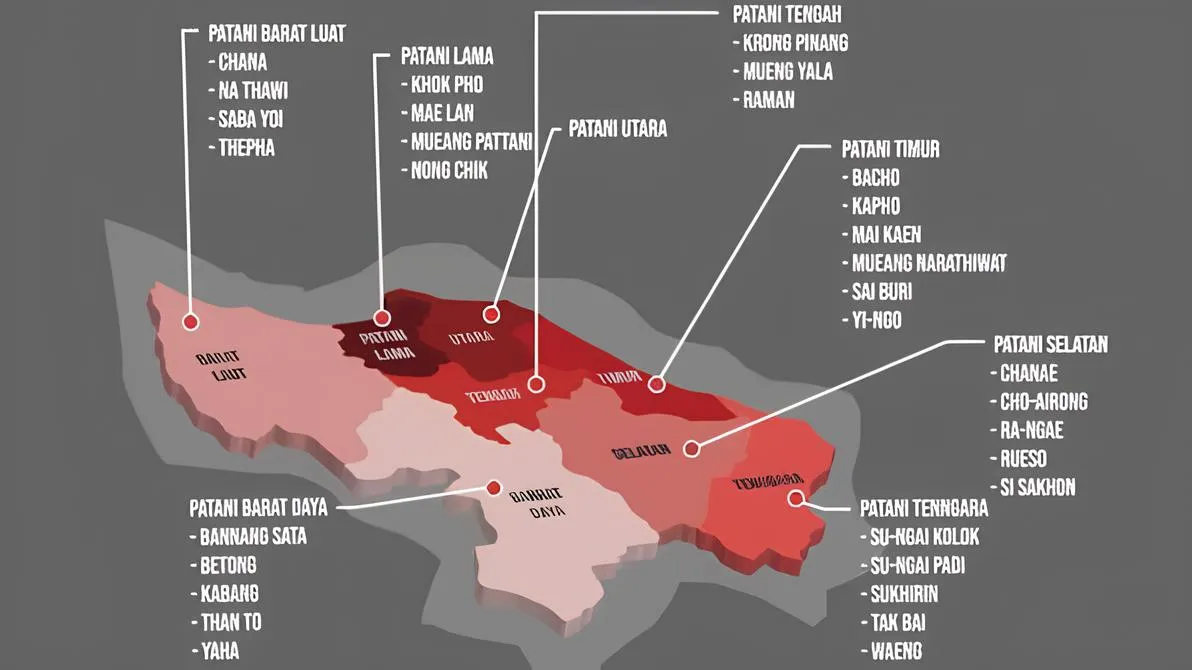
The politics of the military junta and the change of regime in Thailand greatly influenced the direction of resolving the separatist conflict in the southern regions (Patani, Yala, Narathiwat, and part of Songkhla).
The political influence of the military Junta on the settlement of the conflict between Bangkok-Patani resulted in inconsistent political will of the Thai government. On the one hand agreed to dialogue, open and back lanes, but on the other hand during the dialogue the Thai government delegation did not want to acknowledge every issue that was discussed and agreed. Such conditions, influenced by dualism views of conflict resolution in southern Thailand between the civilian government dominated by the military influence increasingly strong influence of the junta.
Thailand has a long history of Junta, military junta and coup in Thailand began after the Siamese Revolution of 1932, changing the system of government from an absolute monarchy to a constitutional monarchy. From then on, the military became a very dominant political actor and repeatedly took power. Further years 1947-1957: the military launched a series of coups under figures such as Rear Admiral Thawan Thamrongnawasawat, General Phibunsongkhram (silent coup 1951), to General Sarit Thanarat in 1957.
Then in 1973, the events of November 14, in which a major student and popular uprising succeeded in overthrowing the military regime of Thanom Kittikachorn, paved the way for a brief period of democracy. In 1976, the military again staged a bloody coup to crush the leftist/student movement at Thammasat University. Back in 2006, the military launched a coup to oust Prime Minister Thaksin Shinawatra amid sharp political polarization between pro-monarchy and pro-Thaksin groups. Though under the leadership of Prime Minister Thaksin Sinawathra, Thailand’s economic growth is progressing rapidly and infrastructure development is very great. In 2014, Army Chief General Prayuth Chan-ocha led a coup against Yingluck Shinawatra’s civilian government.
Influence on democracy
In general, it can be explained that the military junta has exerted such a deep institutional influence on governance in Thailand. Such conditions have created “military supremacy over civilian authority”. Despite relentless resistance from youth groups and social movements (such as the 2020-2021 mass protests) who are demanding total political reform in order for Thailand to emerge from the shadow of military authoritarianism. However, due to the increasingly strong and entrenched military hegemony, the reform efforts of Thailand as the reform of Indonesia in 1998 is very difficult to realize.
In fact, even though the youth won the elections on May 14, 2023 through the Move Forward Party led by Pita Limjaroenrat. The party managed to win the most votes in the general election. Despite winning in number of House seats, Limjaroenrat’s band failed to become Prime Minister as it was scuttled by senators appointed by the military and the conservative elite in parliament, resulting in the MFP eventually being eliminated from the government-forming coalition.
Thailand’s national political dynamics are very unstable today, it is indicated by formulating draft constitutions that favor the military, for example 2006 and 2014, the military junta dissolved the old constitution and drafted a new constitution that weakens civilian institutions. The 2017 constitution drafted by the junta under General Prayuth Chan-ocha structurally guarantees the military control over politics by controlling control of the Senate, the military is entitled to directly appoint 250 members of the Senate (Upper House).
Furthermore, voting rights to choose the Prime Minister where members of the Senate formed by the military are given the right to vote for the Prime Minister along with the Lower House election results. As a result, civilian parties that win a majority in elections can easily be blocked from forming a government. Other influences changed the atmosphere of democracy to the extent of” procedural”, elections in Thailand are often engineered to only serve as a cover for international legitimacy for junta rule. Although elections were held (as in 2019 and 2023), electoral rules were made in such a way as to benefit military-wing political parties such as Palang Pracharat, the resulting quality of elections lost the substance of Fair Democracy.
Unfair democratic behavior is demonstrated by using judicial institutions to disperse opposition. The military Junta used its influence through alliances with judicial institutions and the Constitutional Court to remove political opponents. Popular opposition parties supported by youth and civil society, such as Thai Raksa Chart, Future Forward Party (FFP) in 2019, to restrictions against the Move Forward Party (MFP) after the 2023 elections, were systematically dissolved with controversial legal charges.
So, the democracy that prevails in Thailand today is very bad, we can state that democracy today has carried out restrictions on Civil Rights and freedom of opinion, freedom of speech, freedom of the press, and civil political activity is very limited. Pro-democracy activists often face repression, arbitrary arrests on sedition charges (sedition), and the use of harsh laws such as Article 112 (Lèse-Majesté) to silence criticism of the monarchy and its military alliance.
The Bangkok-Patani Dialogue
The democratic conditions described above affect the peace negotiations between the Thai government and the Barisan Revolusi Nasional (BRN). If Thailand’s national politics is influenced by the military junta, the policy for organizing dialogue is also inseparable from the influence of the military junta.
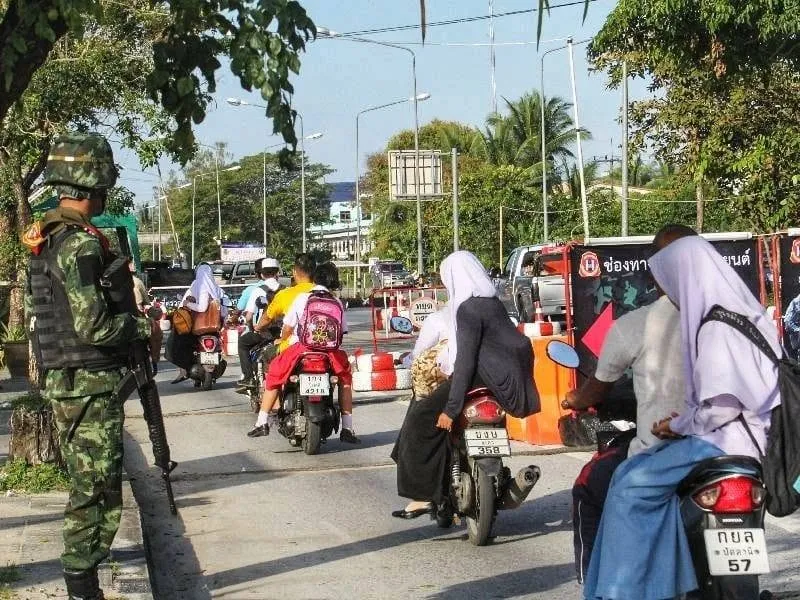
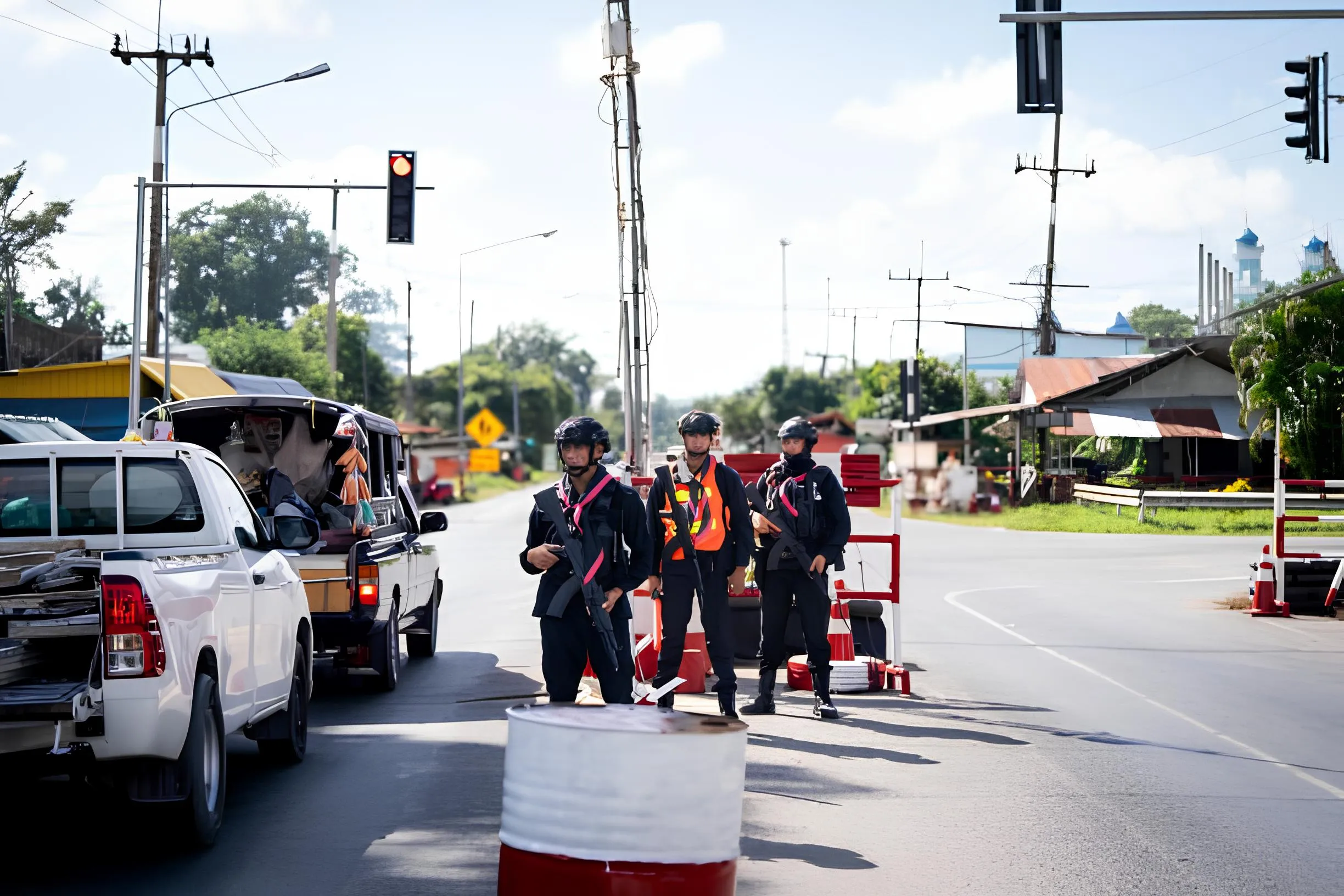
Thus, so far, the pattern of conflict resolution in southern Thailand has been influenced by security and militaristic approaches: junta governments have often viewed conflict in southern Thailand as a matter of security and crime, rather than a matter of local politics or identity. This makes repressive approaches and military operations more often used than inclusive peaceful dialogue. In addition to the centralization and assimilation policy, the central government under military influence often maintained the Old Trinity policy (one Thai Nation, One Buddhism, and submission to the King), which made it difficult for the Patani Muslim majority to recognize the culture, language, and autonomy of the Malays.
The above conditions cause the negotiation process to take place in a negotiation inconsistency, shown by every time there is a coup or change of military/junta leadership, the peace negotiating team is often overhauled. This made negotiations with rebel groups such as the BRN (Barisan Revolusi Nasional) and the PULO faction cut off halfway and had to start from scratch.
Finally, the current Thai government, although conducting dialogue, is merely to show the international community that they have the political will to resolve conflicts in Patani peacefully. Such conditions are not very fair, then to resolve the conflict of Patani-Bangkok, then a strategic step back to 1909 where Britain intervened through the Anglo Siam Treaty, then the British Government today can be responsible for returning the land to the people of Patani Patani.