

Friday, 12 June 2026 – Representatives the Phumi Nam Phung Community, together with Save Yamu Network (SYN), officially submitted a letter of objection to the Governor of Pattani Province in April 2026. However, as of June 2026, the government had not yet provided a response.
The community have firmly opposed the construction of a 9.9-megawatt of Waste Energy Power Plant initiated by the Yamu Tambon Administrative Organization (local government) in Yaring District, Pattani Province.
The community argues that the project is procedurally flawed because it failed to ensure meaningful public participation. They also believe it would cause severe environmental, health, and grassroots economic impacts, it will be affecting more than 13,424 households across three sub-districts.
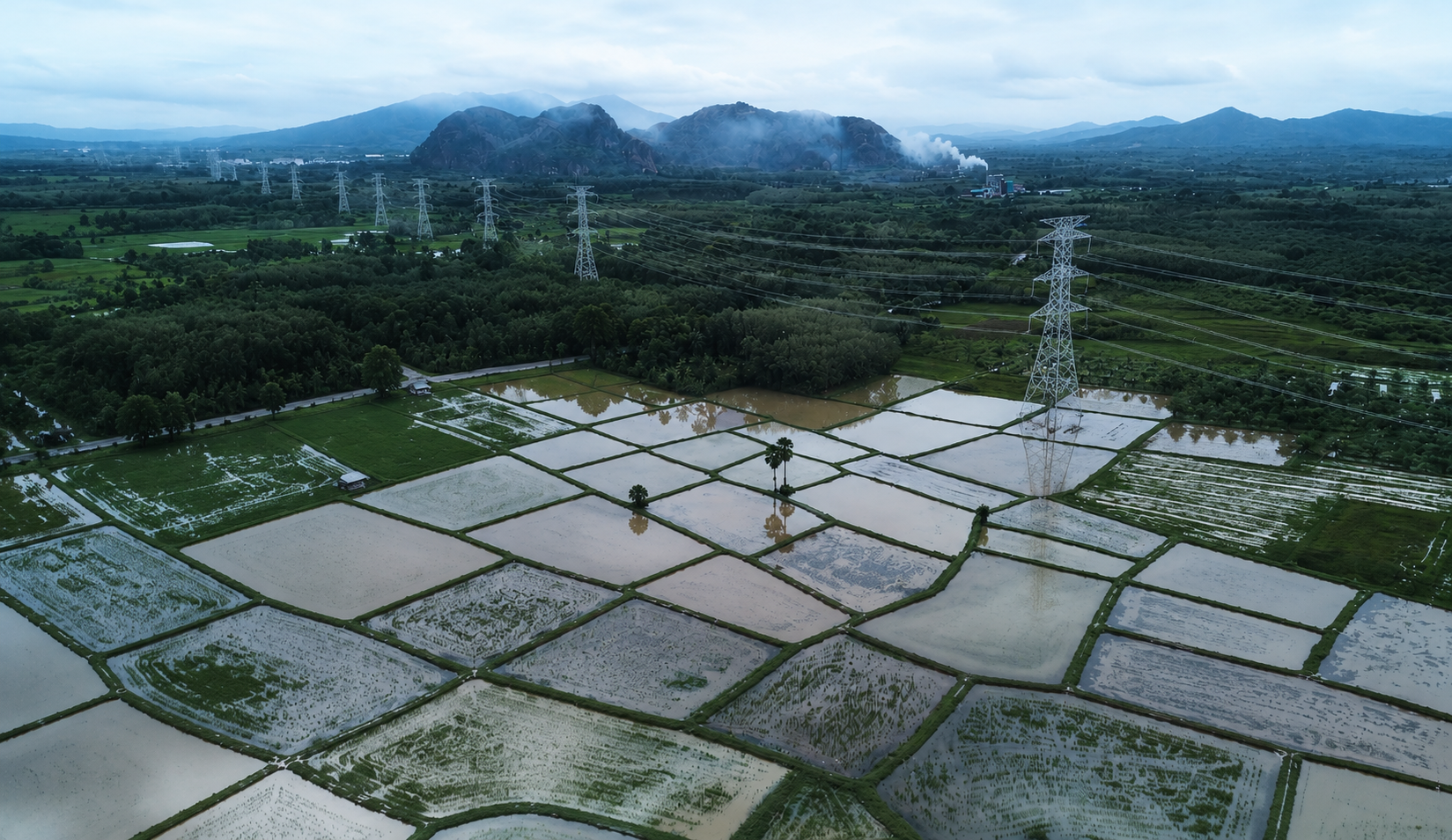
The proposed site for the energy of waste facility is located within a lowland peat swamp wetland covering more than 2,000 rai (approximately 320 hectares), known locally among Patani residents as “Baroh” (called Rawa Ta Chae). The area serves as a wetland ecosystem that remains inundated during the rainy season and functions as a natural retention basin or catchment area to prevent floods from reaching the town center and government complexes.
In addition, the Phumi Nam Phung Community is a customary territory rich in historical and cultural significance. The area is home to the ancient La Khor Pa Ngu Spring (Phumi Nam Phung), a natural water source that flows continuously throughout the year, even during the most severe dry seasons. This demonstrates the critical importance of the underground water system in the area, which is directly connected to downstream tributaries flowing into Pattani Bay.
Arifin Soh of the Save Yamu Network, along with community, emphasized that filling the swamp area to construct the waste-processing facility would trigger large-scale systemic environmental damage.
According to Arifin, the project would eliminate vital water catchment areas, increase flooding risks around Yaring Hospital, and destroy a key source of food security for the peoples. He said the impact would also affect economic activity, currently valued at approximately 14.9 million baht annually, with agriculture accounting for 89.3 percent and livestock and fisheries contributing 10.7 percent.
“Our potential commodities, including nipa palm fruit and palmyra sugar, generate up to 7.3 million baht in annual income. If water sources and wetlands become contaminated by landfill leachate, the livelihoods of local residents will collapse almost immediately,” said the environmental advocate.
The communities are demanding the permanent cancellation of the 9.9 MW waste-to-energy project planned by the Yamu local administration in area Moo 2, arguing that such a step is necessary to protect the ecosystem and the community’s right to health.
They are also calling for a review of alternative waste-management solutions based on sustainability at every stage—from upstream to downstream—rather than relying on what they describe as destructive technologies such as waste incinerators.
According to the Save Yamu Network (SYN), Patani communities are currently facing difficult circumstances due to the ongoing armed conflict, and the project should not further burden their social and economic conditions.
The group urged the Governor of Pattani Province to recognize the current situation facing local residents, who are already struggling to sustain their livelihoods, and not to create additional problems through an infrastructure project with long-term consequences.
“The guiding principle should be: ‘Do not create new problems on top of existing ones,’” Arifin concluded.