

In Several international news, such as AFP, Al Jazeera, and others, have reported on an interesting statement made by Dr. Ni’matullah, a spokesperson for the National Revolutionary Front (BRN), Furthermore it elaborated upon in an editorial by TUNA MUDA.
Dr. Ni’matullah bin Sri shed light on the logic behind the war of words in Patani. During its Information Operations (IO), Thailand generally refers to us, the Patani fighters, as “Con”—meaning “militants or terrorists.” Naturally, Dr. Nik, as he is affectionately known, quickly retorted that we, in turn, would call them “colonizers.” At first glance, it appears to be an equal exchange—one insult met with another. But upon closer examination, what actually occurs is an imbalance, and that is precisely where the tactic comes into play.
“Con”—or “militants/terrorist”—equates the Patani Fighters with armed criminals deserving of the “terrorist” label, far removed from the status of political actors entitled to sit as equals at the negotiating table. Compare this to “colonizers,” a far more serious accusation because it attacks the historical legitimacy of Thailand’s very existence on Patani’s homeland. Nimatullah did not merely retaliate with an insult of equal weight; he raised the stakes of the conflict far higher than where the Thai government had started.
This narrative is built on the claim that the people of Patani are already familiar with the Thai security system itself, and that the BRN is the people of Patani—the people of Patani are the BRN. Whereas accusations of “insurgency” previously targeted only a handful of armed Patani fighters, this claim completely reverses the situation. It is as if the entire Patani population is being accused by the IO and the Thai people, and it is also the entire Patani population that has the right to respond with a single word—“colonizers”—directed simultaneously at both the IO and the Thai government.
This is where both the danger and the effectiveness of this exchange become apparent. If Patani fighters retaliate with insults on the same level as “terrorists,” the conflict will remain stuck at the same level as before. But once countered with historical and structural accusations such as “colonizer,” the conflict is elevated to a higher level. The issue is no longer a matter of who is the criminal and who is the victim between the Thai government and the Patani fighters, but rather a matter of who actually has the right to be on Patani’s land from the very beginning—between the people of Patani and the Thai government—a question that, once raised in the public sphere, is far more difficult to retract than a mere accusation of being a street thugs.
The Anglo-Siamese Treaty: The Source of the Patani People’s Misfortune
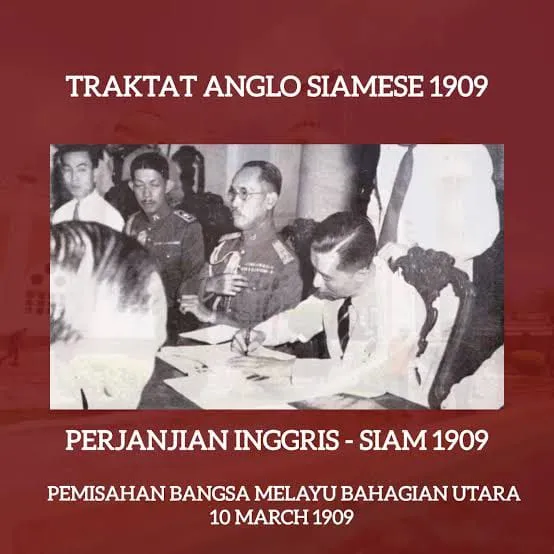
The Anglo-Siamese Treaty of 1909 (also known as the Bangkok Treaty) was a treaty signed on March 10, 1909, that established the modern border between British Malaya and Siam (now Thailand). At that time, the British controlled the Malay Peninsula, known today as Malaysia. Undoubtedly, the conflict in Patani—or Southern Thailand—today has a very strong and direct correlation with the 1909 Bangkok Treaty. That treaty is the historical root and legal basis that has fueled prolonged resistance from the Malay-Muslim community in the region.
At least, there are three key points that can serve as the basis for our analysis in addressing this connection, namely:
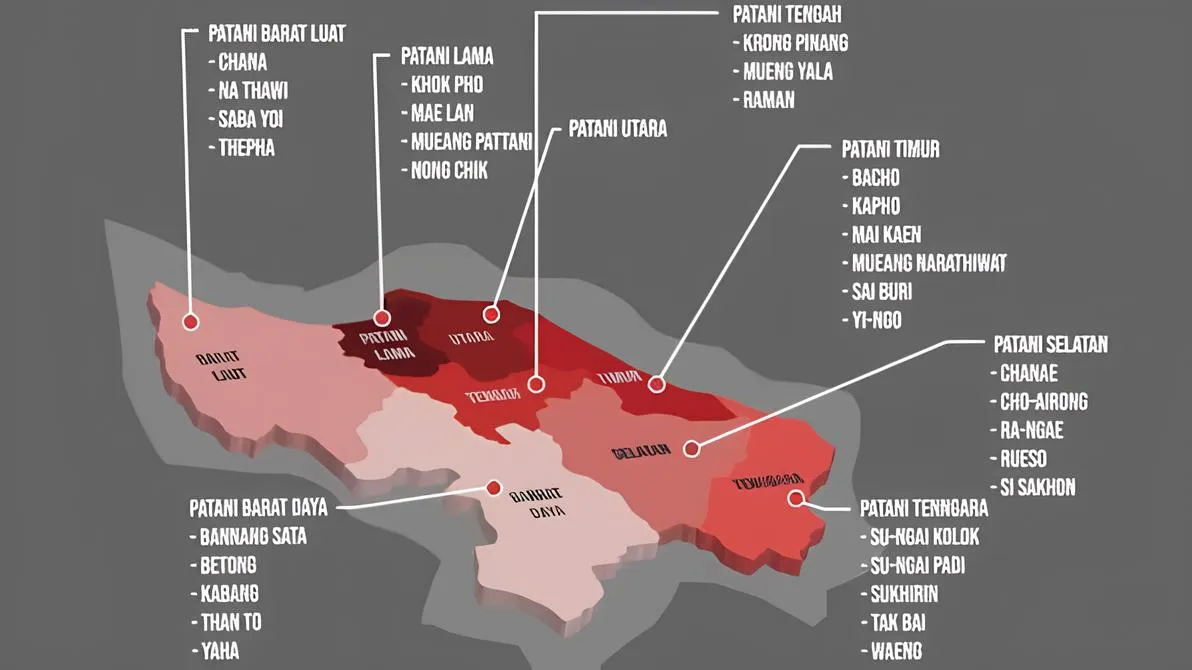
First; the treaty served as the basis for the unilateral annexation of territory. Prior to 1909, Pattani (encompassing the regions of Pattani, Yala, Narathiwat, and part of Songkhla) was part of the Great Pattani Sultanate, a sovereign Malay-Muslim kingdom. Through the 1909 Bangkok Treaty, the British (who colonized Malaya) and the Kingdom of Siam (Thailand) drew new border lines without involving or seeking the consent of the sultans or the local Malay people.
Second; the treaty failed to account for identity conflicts, even though Pattani and Siam have vastly different cultural roots. Instead, this treaty forced assimilation. Following the treaty, Bangkok implemented an aggressive policy of cultural assimilation (Thai-ization) in the decades that followed, such as mandating the use of the Thai language, banning Sharia law, and restricting Malay identity. This is what sparked the emergence of an armed resistance movement beginning in the 1960s to preserve their identity and demand the right to self-determination.
Third; as a result of territorial annexation and forced assimilation, resistance by the people of Patani was inevitable. The National Revolutionary Front (BRN) is one of the organizations fighting for the people of Patani; their struggle is aimed at restoring the historical rights lost as a result of the 1909 Treaty. The escalation of the conflict since 2004, culminating in the recent spate of armed attacks, is a direct continuation of that resistance. Therefore, Patani—as a national entity prior to 1909—possesses strong legitimacy to claim its land rights as a nation.
The United Kingdom must intervene
Historically, Britain has indeed had close ties through the 1909 Anglo-Siamese Treaty (Bangkok Treaty), which officially ceded the territory of the Sultanate of Patani to the Kingdom of Siam (Thailand).
Geopolitically, the British Empire—and/or the British government today—is closely monitoring the geopolitical developments unfolding in Southeast Asia. Several conflict zones are linked to the decolonization process, which was not properly resolved by the British government. One nation still fighting for its right to independence is the Greater Patani people, a situation stemming from the Anglo-Siamese Treaty. Another example is Myanmar, where, following the British withdrawal, a civil war erupted due to a lack of agreement on the form of state they wished to establish while maintaining mutual respect for their respective ethnic groups.
In addition to Patani and Myanmar, there was also the Kingdom of Aceh, where the British government initially recognized the sovereignty of the State of Aceh on March 17, 1824; however, together with the Dutch government, they later amended the agreement—known as the 1871 Treaty of Sumatra—which authorized the Dutch to attack Aceh.
Therefore, the British government today must remember that its history of eagerly establishing colonial territories has left a tragic legacy for the regions it once governed. It must therefore take responsibility for resolving this issue, lest generation after generation be forced to bear the burden of a history that will never be forgotten.
Consequently, there are several considerations the British government must take into account to serve as a facilitator or mediator in resolving the conflict between Pattani and Bangkok, including:
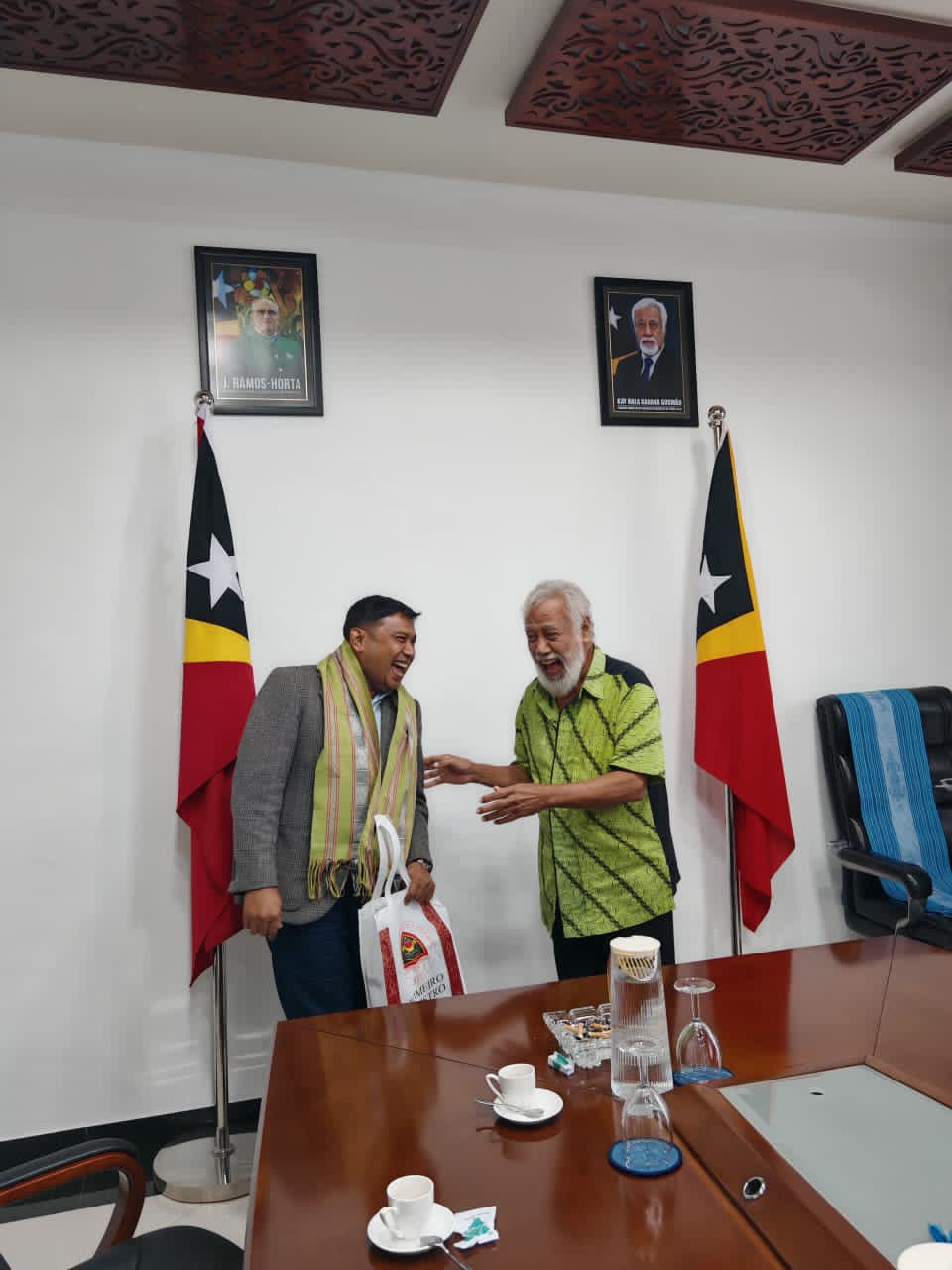
First: Historical Responsibility—the view that the United Kingdom bears a moral burden because the modern border that is fueling the current conflict was drawn through its colonial treaties in 1909 without the consent of the local Patani community. This approach was also taken by Portugal in resolving the conflict over East Timor with the Republic of Indonesia. Second: Access to Authentic Archives. The UK undoubtedly holds historical documents, maps, and original treaties in its National Archives. The UK’s involvement could help unseal neutral historical data to clarify the background of this territorial dispute. Third, international mediation experience: As a global power and a member of the UN Security Council, the UK is considered to possess strong diplomatic capacity to facilitate fair dialogue between the Thai government and the Patani advocacy groups.
Finally, may this article provide food for thought for all parties involved in resolving the humanitarian crisis and human rights violations by promoting a mutual political agreement to restore the Patani people’s rights to self-determination.
Written: Maun Kagawasan.